
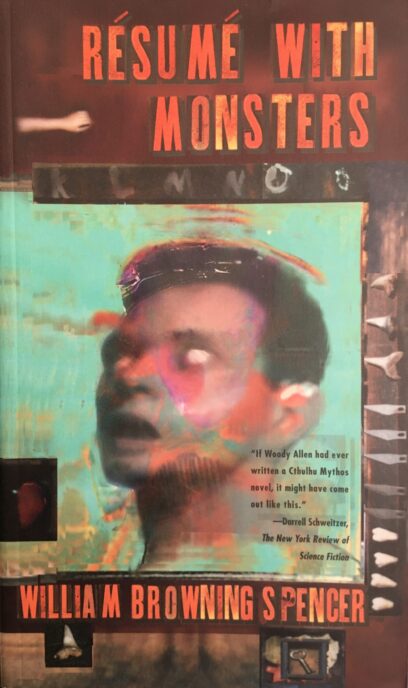
 By WILLIAM BROWNING SPENCER (White Wolf Publishing; 1995)
Comedic horror about a working drudge and his encounters with H.P. Lovecraft’s monsters, who are looking to take over the world, starting with the copy shop where he works—yes, RESUME WITH MONSTERS is that kind of book. It’s certainly a standout effort by the underrated William Browning Spencer, who has a strong feel for horrific comedy and a thorough knowledge of his chosen genre.
The protagonist is Philip Kenan, a failed horror novelist with a none-too-stable mental state and a love life that’s about as successful as his writing career. Philip works at the Austin-based Ralph’s One-Day Resumes, where he comes to suspect that his co-workers are zombies controlled by otherworldly entities. Being a Lovecraft enthusiast, Philip recognizes the entities (which include Chtulhu, Yog-Sothoth and Azathoth), and with the help of the fabled text THE NECRONOMICON takes them on—but is any of this truly “real” or merely projections of Philip’s delusional psyche?
That question is never answered to my satisfaction, although I was sated by the author’s not-inconsiderable wit and panache. Contained are many clever riffs on Lovecraft’s favorite themes: time travel, alternate realities and arcane incantations.
Also offered up is a satirical depiction of Philip’s place of employment that’s fully on target. Anyone who’s ever worked a crappy minimum wage job will recognize the “motivational literature” that accompanies Philip’s paychecks (with titles like “Maintaining a Positive Attitude”), the customers who claim to “know of a store, generally in another city, where copies could be obtained for half as much money and the atmosphere was altogether more pleasant,” and the countless other tiny but crucial details.
The story overall is notably tripped-out (with Philip K. Dick being another evident influence) and not a little confusing, which makes it all the more disappointing that the climax involves a highly conventional sequence of rescues and escapes. It works, but given the sharpness of the novel’s satire and the acuity of its psychology, I was really expecting a bit more.