
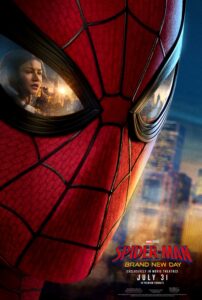
A confession: I don’t get Spider-Man. He’s a superhero I’ve always found goofy looking and lacking in interesting superpowers; are the talents of Peter Paker, a.k.a. Spider Man, who “does whatever a spider can” (which mostly consists of shooting webs), really that cool? I think not.
SPIDER-MAN: BRAND NEW DAY (2026) Trailer
I’m fully aware that this stance puts me in the minority, which is in keeping with superhero preferences that tend toward the eccentric. Prior to the comic book renaissance of 1986 (the year of THE DARK KNIGHT RETURNS and WATCHMEN) I never had much interest in superheroes, with my favorite SUPERMAN movie being the much-reviled third entry from 1983 (which, with its evil supercomputer capable of destroying the world’s energy sector, can be said to have contained the series’ most terrifyingly plausible antagonist), while the massively popular Tim Burton BATMAN movies never resonated with me.
Nor, for that matter, have I been too impressed with the SPIDER-MAN film and TV adaptations of years past. I recall following reruns of the 1967-70 SPIDER-MAN cartoon show as a kid, but all I remember about that program now is its catchy theme song. Of the SPIDER-MAN films, I’ve always found the stories behind their making more interesting than the finished products; those stories, for the record, involved attempts by Roger Corman and the late Cannon Group to mount a SPIDER-MAN movie in the 1980s (with prospective directors that included Tobe Hooper, Joseph Zito and Albert Pyun), followed by a decade-long effort at nailing down the film rights by a consortium that included James Cameron, and the Sam Raimi directed SPIDER-MAN flicks of 2002-07 setting the template for superhero cinema moving forward.
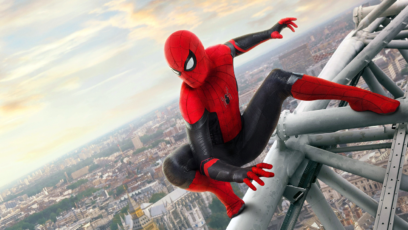
The character’s latest incarnation, the currently-in-release SPIDER-MAN: BRAND NEW DAY, is breaking nearly every viewership record that exists. It crossed the $1 billion mark in just 12 days, and is projected to end its theatrical run with a $2.5. billion haul, making it the third top grossing movie of all time.
In some respects the monster success of SPIDER-MAN: BRAND NEW DAY makes perfect sense. It’s a superhero movie, which is something audiences seem to crave above all else, and (from what I’ve heard) one that’s free of the preachiness and self-importance that tend to characterize so much of today’s comic book cinema. Examples of such include the post-2020 releases by Marvel, containing political messaging decreed by its parent company Disney (which wasn’t involved in the Sony backed Marvel production that is SPIDER-MAN: BRAND NEW DAY).
Another example of misguided modern superhero cinema would be summer 2026’s other major comic book adaptation SUPERGIRL, which holds the title of biggest money-loser in DCU history. I didn’t bother going to see SUPERGIRL, as based on its publicity campaign I had a hard time discerning whether it was an actual movie or a filmed political conference; either way, it didn’t look like much fun.

I likewise haven’t yet seen SPIDER-MAN: BRAND NEW DAY. From what I’ve heard, it’s a pretty good movie—not exceptional in any way, but pretty good. Perhaps in light of Hollywood’s uninspiring current output (which in addition to SUPERGIRL includes bummers like THE MANDALORIAN AND GROGU, consisting of three mashed-together episodes of the MANDALORIAN TV series, and MOANA, a live-action remake of an animated film that’s not even very old), pretty good is enough to justify the movie’s record-breaking box office haul. Clearly, though, there’s another dynamic at work here.
Spider-Man is a rare example of a Hollywood superhero whose popularity extends beyond America’s borders. That’s certainly not the case with Superman, an American-only phenomenon despite the jettisoning of the last four words of the slogan “Truth, justice and the American way,” and Batman isn’t much more popular with international audiences (I find I’m flashing back to Michael Caine’s widely quoted claim about how Superman is how America views itself and Batman how the rest of the world views America).
Spider-Man’s international appeal, however, is undeniable, and evident in the fact that around sixty percent of SPIDER MAN: BRAND NEW DAY’s box office takings come from outside the US. I’d say that right now Spidey is the top property in the world, eclipsing STAR WARS, LORD OF THE RINGS and Harry Potter in affection and bankability.
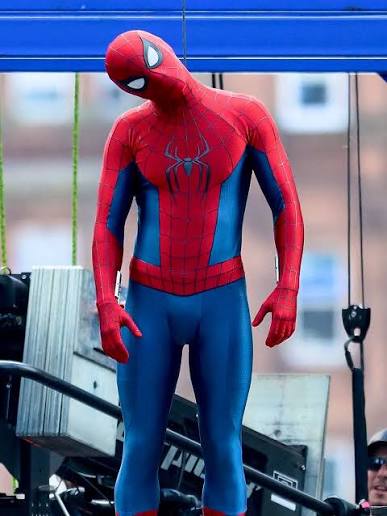
The character’s relatability, it’s been claimed, is due to his awkwardness. Certainly, the depiction of Peter Parker as a nerdy high schooler proves his creators Stan Lee and Jack Kirby really knew their target audience. So, for that matter, did other Lee-Kirby creations like THE INCREDIBLE HULK and X-MEN, with the latter being in my view the most worthwhile of the three properties (particularly in the 2000 film adaptation, which preceded Raimi’s SPIDER-MAN, and can lay claim to being the true progenitor of modern comic book moviemaking), but, of course, it was Spidey who got the gold ring.
Peter Parker’s backstory, involving the killing of his uncle Ben and a fateful spider bite, is more relatable than those of most superheroes. Unlike Batman, who grows up to be the richest man in the world, Parker retained his modest outsider status throughout the SPIDER-MAN timeline, and unlike Superman, an alien being who relocates from Kansas to New York City, romances a hot society gal and creates a dorky alter ego (suggesting that, as articulated by David Carradine’s famous KILL BILL monologue, “Clark Kent is Superman’s critique on the whole human race”), Parker remains close to home, confines his major romantic interests to high school crushes, and remains Peter Parker inside and out of the Spider-Man costume.

The fact that the character is currently being played by the unassuming Tom Holland is certainly good news. I’m admittedly not a fan of his work in THE ODYSSEY but, based on Holland’s appearance in SPIDER-MAN: FAR FROM HOME (2019), I feel he embodies Parker’s awkward nature far better than the remote and inscrutable Tobey Maguire and the handsome and self-possessed Andrew Garfield, two fellows who previously incarnated the role (and in Maguire’s case will apparently be doing so again in AVENGERS: DOOMSDAY).
But again: I’m not impressed with Spider-Man. Furthermore, I believe the success of SPIDER-MAN: BRAND NEW DAY has less-than-encouraging connotations that stretch back to the aforementioned Roger Corman, who was known to complain about Hollywood getting rich off the subject matter of his low budget potboilers. Monster mashes, sex comedies and erotic thrillers were Corman staples, as were superhero movies (on a related note, SUPERGIRL was overseen by the DCU’s current head James Gunn, who got his start with the Corman-inspired trash movie outfit Troma, and many claim that Gunn’s “Tromatic” orientation has never left him).

It was Corman, let’s not forget, who beat Hollywood to the punch by nearly a decade with a prototypical superhero movie: the notorious 1994 FANTASTIC FOUR adaptation. Hence, just as JURASSIC PARK, AMERICAN PIE and BASIC INSTINCT directly followed Corman’s lead, so did the SPIDER-MAN films. You might argue that they outdid Corman’s efforts, but I’m not entirely sure that’s the case, with the quasi-campy tone and action-centered orientation of the Corman FANTASTIC FOUR replicated quite faithfully by Sam Raimi et al.
My conclusion? That SPIDER-MAN: BRAND NEW DAY may have revived an ailing box office and provided moviegoers with some diverting escapism, but in all other respects it’s a step back.