
Having read a fair amount of Halloween themed fiction, I’ve come to a most unfortunate conclusion: most of it sucks.
This is despite the fact that much of this fiction was written by skilled horror scribes working within what one would think would be their wheelhouse. For the most part, however, the Halloween narratives by those scribes are lackluster, as proven by disappointments like PRANKS by Dennis Higman, ALL HALLOWS’ EVE by Richard Laymon, HALLOWEENLAND by Al Sarrantonio and ALL HALLOWS by Christopher Golden. The problem may be that this particular holiday, with its kid-centered orientation and assortment of cozy traditions, may be too restrictive for writers as creative as these, or perhaps the Halloween themed texts/films of Ray Bradbury and John Carpenter (two names, you’ll find, that are well represented below) have simply exhausted the holiday’s dramatic possibilities.
Yet there do exist worthwhile Halloween stories, as proven by the thirteen narratives ranked below, which constitute my Halloween favorites. I’ve included both stories and novels in the ranking, which includes nearly all the important names in Halloween fiction (Bradbury, Carpenter, Jack Martin, Washington Irving, etc.) and all the tropes we’ve come to expect from the holiday (pumpkins, trick or treating, ghosts, etc.). In short, there’s something here for everyone.
Happy Halloween!
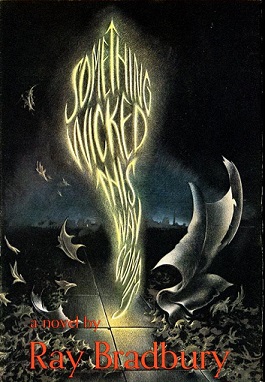 1. SOMETHING WICKED THIS WAY COMES by Ray Bradbury
It’s not a Halloween story, strictly speaking, SOMETHING WICKED THIS WAY COMES, hailing from 1962, will always be the ultimate Halloween story in my eyes. It’s set in October, involves seasonal festivities and was written by America’s greatest practitioner of Halloween-set fiction (and is far preferable in my view to that author’s other major seasonal narrative THE HALLOWEEN TREE). More to the point, SOMETHING WICKED THIS WAY COMES contains all of Ray Bradbury’s career long trademarks: a deeply felt sense of poetic nostalgia, a vividly evoked small town setting and an equally vivid sense of horrific fantasy, all contained in a tale whose haunted travelling circus set-up was admittedly borrowed from that of THE CIRCUS OF DR. LAO (1935) by Jack Finney, but which has inspired countless subsequent circuses, in books ranging from BLIND VOICES (1978) by Tom Reamy to NEEDFUL THINGS (1991) by Stephen King. This concept, however, found its optimum form back in 1962, at the hands of an author whose brilliance has yet to be replicated.
2. DARK HARVEST by Norman Partridge
A short 2006 novel that serves up a veritable banquet of old-fashioned chills and up-to-date splatter. Reading like a testosterone-fueled rethink of Shirley Jackson’s classic tale “The Lottery,” DARK HARVEST is set on Halloween night, 1963, in a small Midwestern town. The teenage boys of the community are following a yearly ritual of hunting a supernatural entity called the October Boy, a pumpkin-headed figure whose insides are stuffed with candy. Each year the October Boy heads for the town church, and it’s the job of the boys to make sure the OB doesn’t make it. The novel is related from a completely absorbing, smart-alecky first person perspective, and contains breakneck action set pieces paired with an introspective dimension that deepens as the story advances.
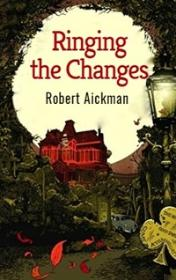 3. “Ringing the Changes” by Robert Aickman
You can’t go wrong with Robert Aickman, who in “Ringing the Changes” (1955) offered up one of his more atypical stories. It’s an October 31st set depiction of a mismatched couple honeymooning in a coastal town where church bells ring continuously, apparently to wake the dead. More overtly plot-driven than is standard for Aickman (who functioned best with psychological frisson), the story boasts a depiction of seafront England that’s crisp and atmospheric, and fully convincing despite (or perhaps because of) its surreality.
4. HALLOWEEN by Curtis Richards
A novelization of the John Carpenter classic HALLOWEEN (1978) by “Curtis Richards” (Richard Curtis, actually), and a strong enough piece of work that Carpenter used elements from it in his script for HALLOWEEN II (1981). Richards wreaks some minor but crucial changes on Carpenter and Debra Hill’s HALLOWEEN screenplay, with the soulless Michael Myers given a supernatural rationale for his psychosis, which is directly tied to the powers invoked by the ritual of Samhain, the Druid festival of the dead. As we all know, the youthful Myers stabs to death his older sister, for which he’s interred in a mental hospital for the next fifteen years; he breaks out to terrorize a bunch of teen babysitters before he’s finally brought down (or so it seems) by the determined Dr. Loomis. Cliff Richards never quite succeeds in replicating the film’s keenly wrought suspense, but makes up for that with some profoundly impacting death scenes and sly commentary on the narrative’s implausibilities, as in the knowing passage “Nice going, Laurie, she said to herself. Why didn’t you just shout, ‘I’m in here, Mr. Murderer!’”
5. “By Bizarre Hands” by Joe R. Lansdale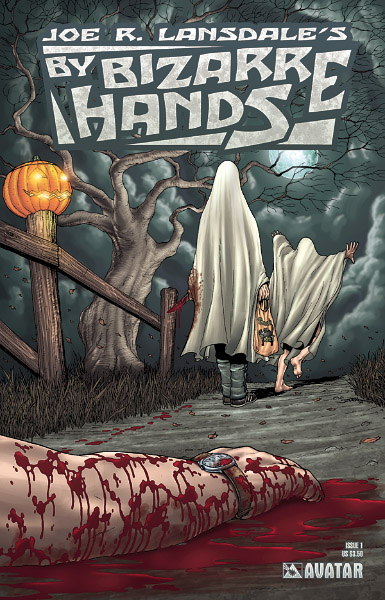
An especially unforgiving outing from Texas’ own Joe R. Lansdale, hailing from the late 1980s (a period that also brought Lansdale’s fearsome “Night They Missed The Horror Show”). “By Bizarre Hands” is about Preacher Judd, a fellow haunted by memories of his mentally unsound sister, who was murdered on Halloween night without ever having been baptized. It’s Halloween again, and Preacher J., upon learning of another feeble-minded young woman living nearby, decides to provide her with the baptism his sister never received. The succeeding visit, needless to say, entails much more than he, or we, initially suspected, in a story that lays bare the horrific depths of racism, misogyny and psychosis underlying so-called southern hospitality, with the Halloween setting a curiously appropriate addition.
6. “The Legend of Sleepy Hollow” by Washington Irving
An obvious choice, yes, but a strong one. There’s a reason this 1820 story has resonated for as long as it has, and why I’ve never been able to shake its description of the mousy schoolteacher Ichabod Crane pursued by a headless horseman through the nocturnal reaches of a secluded village in upstate New York. The story is a bit overlong and drawn-out for my tastes (I say it could have been told just as well at a fraction of its 12,000-plus word count), with an overabundance of detail about Crane’s attempts at settling into and finding a mate in Sleepy Hollow, but in terms of atmosphere, description and teasing mystery (all most potently utilized in the story’s concluding passages), it’s a fully justified classic.
 7. ALL HALLOWS EVE by Charles Williams
This 1945 publication was the final novel by the UK’s Charles Williams, and an excellent example of his peculiar brand of metaphysical spirituality. It’s certainly not an easy read, steeped as it is in the tortured psychology that typified Williams’ fiction, in which people are forced to confront their spiritual shortcomings through confrontations with the supernatural. Involved are two recently deceased women navigating the spirit world, while on the earthly plane an evil magician is seeking to become the new messiah. Inevitably the ghost women are sucked into the magician’s vortex, as are their still-living colleagues, precipitated by a painting that presents the magician and his followers as walking cockroaches. In truth, there’s nothing else quite like this novel—outside Charles Williams’ other books, that is, of which ALL HALLOWS’ EVE is among the most accessible.
8. “The October Game” by Ray Bradbury
A 1948 story that showcased a much darker side of Ray Bradbury than that presented in SOMETHING WICKED THIS WAY COMES. In “The October Game” we get to know Mitch, a severely dissatisfied man who “had never liked October…there was a feeling of autumn coming to last a million years.” This fellow is determined to commit a horrific act against his hated wife, an act marked by prolonged “duration through imagination.” The darkly poetic proceedings, which boil down to a Mitch initiated game played by children on Halloween night, represent Bradbury at his nastiest, with an impossible-to-forget slow burner of a final line.
9. PORK PIE HAT by Peter Straub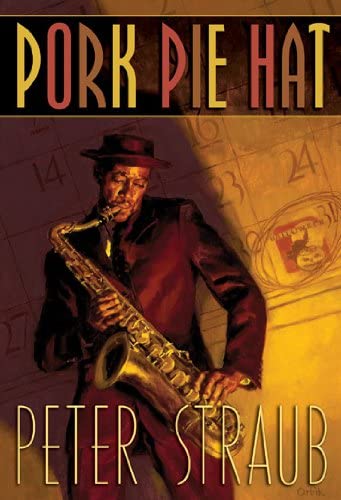
A 1994 novella that united two of the late Peter Straub’s major passions: jazz and horror. Featured are the time tripping narrative perturbations that typified Straub’s post-GHOST STORY (1979) fiction, with a story related by two distinct voices and set in just as many time periods. Also present are the author’s strong grasp of characterization and not-inconsiderable descriptive power. It centers on Pork Pie Hat, an elderly jazz musician who during an interview relates a childhood memory that occurred on All Hallows Eve. It involves the youthful Hat entering a rough area and witnessing a (seeming) murder, the outcome of which is never made clear, as the drug-addled Hat is a less-than-reliable narrator. He is, however, extremely well characterized, as is the jazz milieu in which he resides. Plus, his ultimate message is a pertinent one: “Most people will tell you growing up means you stop believing in Halloween things—I’m telling you the reverse. You start to grow up when you understand that the stuff that scares you is part of the air you breathe.”
10. “He’ll Come Knocking At Your Door” by Robert McCammon
An impressive exercise in contained intensity, set in an extremely well evoked Alabama milieu on you-know-when. It’s then that a man learns of a list of things demanded by a mysterious “Halloween Visitor” who is set to appear that night on the man’s doorstep. Giving the visitor what it wants will result, apparently, in great fortune, but denying the visitor’s wishes will result in things getting very, very dark. The story concludes with the type of audacious large scale horror set-piece McCammon does better than nearly anyone else.aHallo
 11. “Halloween Rampage” by John Hughes
Yes, that John Hughes, who prior to becoming a Hollywood bigshot contributed stories to NATIONAL LAMPOON magazine, stories that bore a uniquely twisted sensibility. None of those texts were particularly well written, but by October 1980, when “Halloween Rampage” saw print, Hughes’ prose had attained a reasonable level of competency. The tale is narrated by an apparently upstanding fellow proclaiming that “I don’t think society needs Halloween vandalism,” and curses those who participate in such, yet admits that in his early years he committed some Halloween mayhem himself. The “joke” is in how insanely elaborate and downright evil those pranks truly were, with a homemade dummy thrown in front of cars, a babysitter terrorized and, finally, an obscenity painted on a railway underpass. Unadorned simplicity is this story’s major attribute, as are the photographic illustrations included in its original NATIONAL LAMPOON publication.
12. “The Halloween Phantoms” by John R. Little
John R. Little has a talent for indelible conceptions, as is evident in this Halloween set tale bearing a Shirley Jackson worthy concept. Involved is the Minnesota based widower Ellen finding a bag containing a note instructing her to distribute bags of candy to three homes, or suffer “the wrath of the Phantom Curse!” After the bags have been distributed a sign reading “WE’VE BEEN BOOED!” is hung on the distributor’s door, meaning Ellen will have to find houses that haven’t yet been Booed, which proves a mighty difficult proposition. The story fizzles a bit in its final pages, but as a chilly evocation of grief, enforced conformity and suburban angst, it ranks pretty high.
13. HALLOWEEN III by Jack Martin
This novelization of HALLOWEEN III: SEASON OF THE WITCH (1982), the second of Dennis Etchison’s “Jack Martin” credited novels, represents a dream pairing: that of Etchison, one of the 20th Century’s greatest horror scribes, and the UK’s legendary Nigel Kneale, who penned HALLOWEEN III’s original screenplay. This novel was admittedly based on the rewrite by Tommy Lee Wallace, but Kneale’s folk-infused imagination is evident in the story, about a shady entrepreneur injecting pieces of Stonehenge into Halloween masks, which (in logic comprehensible only in horror movie-ville) kids wear while watching a flashing TV pumpkin on Halloween night that somehow causes their heads to split open and disgorge deadly snakes (Kneale’s initial conception, involving induced suicide, was much simpler—and scarier). It’s plenty dumb, yes, but not without flashes of the ineffable genius of Etchison and Kneale (and also John Carpenter, who did a fair amount of uncredited work on Wallace’s screenplay).