
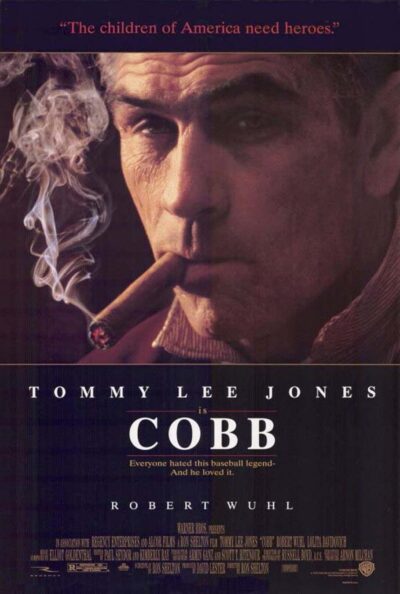
One of a handful of failed Hollywood biopics to emerge from the nineties, with Ron Shelton’s COBB (1994) outdoing HOFFA (1992) and NIXON (1995) in erudition and fascination. It also deserves credit for attempting to deal seriously with the complicated legacy of Ty Cobb (1886-1961), a pioneering baseball star who happened to be a racist, sexist, trigger-happy and borderline psychotic scumbag. Pretty heady material for the Oscar baiting vehicle COBB was, with its Academy Awards showing equivalent to its box office take: nonexistent.
COBB (1994) Trailer
It begins with a biographical newsreel a la CITIZEN KANE (1941), filling us in the highlights of Ty Cobb’s baseball career. The newsreel is a surface-level, hero-worshippy account that reveals Cobb had a violent side and was involved in a high-profile cheating scandal, but says nothing about Cobb’s whoring, brawling and spousal abuse, or the fact that he once killed a man.
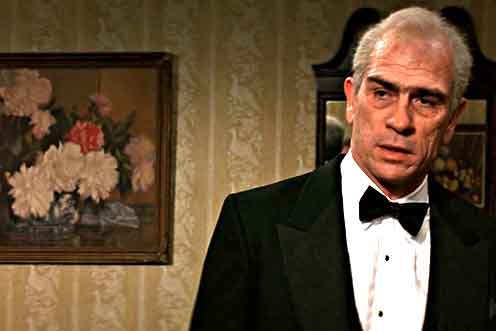
Enter Al Stump (Robert Wuhl), a sportswriter who in the dead of winter, circa 1960, is selected by the seventyish Cobb to write his life story. Stump heads to his idol’s Lake Tahoe hunting lodge, where he’s greeted by gunshots through Cobb’s bedroom door and his black servant (Lou Myers) storming out. Cobb, who has a litany of health problems and a debilitating painkiller addiction, upsets Stump by demanding he write a puff piece centered on Cobb’s greatness—and promptly leads him on a horrific snowbound drive to Reno.
Upon arriving, Cobb is invited onto a casino stage where he shouts racial slurs and clears the room. Later that night he physically abuses Stump and a pretty cigarette girl (Lolita Davidovich), and the following day shoots up a casino. He and Stump flee the scene, and head to a baseball hall of fame ceremony in New York, where Cobb is hoping to reconnect with his “friends.” They of course want nothing to do with him.
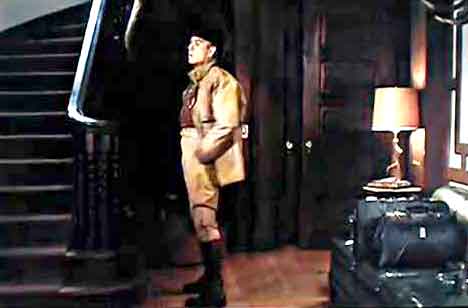
Along the way Stump becomes both caretaker and nurse to Cobb, stating that “I was the only thing keeping the bastard alive, and I kept hoping he’d die.” Stump also writes the puff biography demanded by his subject, but secretly records his own much less savory thoughts on notebook pads he keeps hidden away. Cobb inevitably finds those hidden writings, and nearly kills Stump, only to be overcome by health issues. He ends up hospitalized and before long passes on, with Stump oping to put out the puff biography of Cobb, admitting “I lied for myself. I needed him to be a hero. It is my weakness.”
COBB’s galvanizing force is Tommy Lee Jones in the title role, an acting turn so unabashedly ferocious it all-but obliterates the supporting players Robert Wuhl, Lolita Davidovich and Bradley Whitford. Cobb’s outrages aren’t fully illuminated (Cobb was known to physically assault non-white people in addition to verbally taunting them), but the film nonetheless goes about as far as it’s possible to go in big studio filmmaking. A much bigger problem is the fact that the writer-director was miscast.
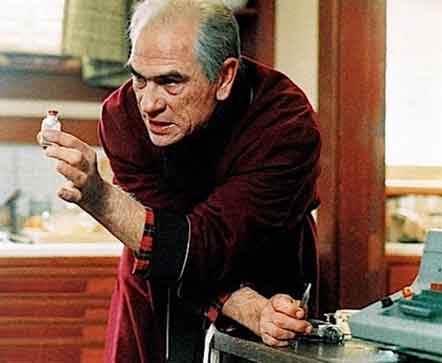
Ron Shelton is known for dialogue-driven comedies like BULL DURHAM (1988) and WHITE MEN CAN’T JUMP (1992), which were inadequate preparation for a film that wants to be (as ROLLING STONE proclaimed it) “The RAGING BULL (1980) of baseball movies.” Unsurprisingly, COBB functions as a very Shelton-esque dark comedy, with poorly modulated tonal shifts and an ill thought-out subplot involving Stump divorcing his wife.
Shelton splits the point of view between that of Stump and Cobb, whose pathology is illuminated in the most hackneyed manner imaginable: via childhood flashbacks in which the color is desaturated. Another hackneyed element is the narration by Al Stump, in which his motivations and hero worship are explained (most likely at the behest of dissatisfied test audiences).
The film, however, looks great, with world class cinematography by Russell Boyd, and has a wide-ranging symphonic score by Elliot Goldenthal. COBB is most vital for posing (however ham-fistedly) troubling questions about the allure of celebrity and its power to excuse bad behavior, something that can be extended to the Dream Factory (which in 1994 was contending with its own Ty Cobb), suggesting the fact that this film has been so little seen may have been by design on the part of Hollywood’s overseers.
Vital Statistics
COBB
Warner Bros.
Director: Ron Shelton
Producer: David Lester
Screenplay: Ron Shelton
Cinematography: Russell Boyd
Editing: Paul Seydor, Kimberly Ray
Cast: Tommy Lee Jones, Robert Wuhl, Lolita Davidovich, Ned Bellamy, Scott Burkholder, Allan Malmud, Bill Caplan, Jeff Fellenzer, Doug Krikorian, Gavin Smith, Lou Myers, William Utay, J. Kenneth Campbell, Rhoda Griffis, Tyler Logan Cobb, Rev. Gary Morris, Jerry T. Gatlin