
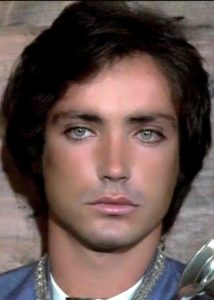
Udo Kier
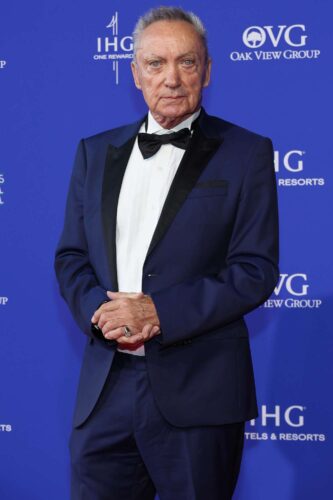
There was nobody quite like Udo Kier. He was an actor who by his own admission “never learned how to act” and had a face that didn’t require make-up to look alien-like, yet his commanding screen presence (I guarantee you won’t look away when he’s onscreen) made for a performer whose film appearances were always welcome.
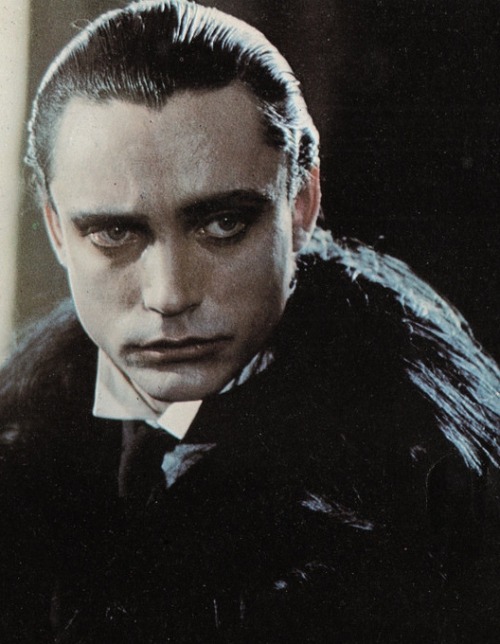
Udo Kier in opening sequence in Blood for Dracula (1974)
Born in Cologne, Germany (in a hospital that was allegedly bombed moments after his birth), Mr. Kier relocated to London in his twenties and, after appearing in Gus Van Sant’s MY OWN PRIVATE IDAHO (1991), settled in America, with his final days spent in Southern California. He tends to be identified for his appearances in art films, made by cineastes like Paul Morrissey, Walerian Borowczyk and Lars von Trier (for whom Kier, starting with 1985’s EPIDEMIC, served as a good luck charm), yet he was also an important figure in the horror pantheon. Not too many horror movie actors, even iconic ones like Karloff, Lugosi and Lee, can be said to have played Frankenstein, Dracula and Dr. Jekyll, but Kier can (in Morrissey’s FLESH FOR FRANKENSTEIN and BLOOD FOR DRACULA, and Borowczyk’s STRANGE CASE OF DR. JEKYLL AND MRS. OSBOURNE). As if all that weren’t enough, he also appeared in classics of the genre like MARK OF THE DEVIL (1970), SUSPIRIA (1977) and BLADE (1998).
Kier was well liked by directors other than those mentioned above. He liked to claim that “I have never asked a director, ‘I would like to work with you,’” as they invariably came to him, with Rainer Werner Fassbinder, Werner Herzog, Gábor Bódy and Dario Argento among those directors. Kier also had the distinction of playing Adolf Hitler no less than three times (in 1989’s 100 YEARS OF ADOLF HITLER/100 Jahre Adolf Hitler—Die letzte Stunde im Führerbunker, the 2002 short MRS. MIETLEMEIHR and the 2023 TV series HUNTERS). He was known for never turning down a paycheck (meaning he graced some truly crappy movies), but wasn’t opposed to making for-free appearances; see the documentary CELLULOID HORROR (2004), about critic/filmmaker Kier la-Janisse and her efforts at creating a British Columbia cult film society, with Kier being her guest at a film festival held at the Vancouver Cinematheque.
The man was certainly prolific, amassing an impressive 276 acting credits and continuing to work quite literally to the end of his life (with three roles in 2025). Certain commentators claim they’ve “never seen him give a bad performance.” I’ve seen Udo Kier give several bad performances (MEGIDDO: THE OMEGA CODE 2, anyone?), but they weren’t dealbreakers, and nor were his oft-indecipherable German accented line readings, as the brilliance of Kier’s particular brand of acting was that it worked as both serious drama and camp.
For an example of serious drama I’d recommend THE PAINTED BIRD (2019), in which Kier played an ignorant miller who briefly takes in the film’s youthful protagonist (Petr Kotlár); it’s a small role, but a memorable one (and not just because Kier’s character ends up gouging out the eyes of a man he catches looking his wife over). For an example of Kier at his campiest, see Guy Maddin’s multi-part FORBIDDEN ROOM (2015); Kier appeared in several of that project’s mini-films (based on actual lost films that Maddin sought to recreate), all of which bore a tone that was extremely fanciful and stylized, and into which Kier fit quite well.
I’m also partial to his work in THE KINGDOM (1994-2022), the legendary Lars von Trier TV series that among other oddities saw Kier being (literally) birthed. His role in the low budgeter LOVE OBJECT (2003), as the disapproving landlord of the film’s protagonist (Desmond Harrington), was rather thankless, but stood out, nonetheless. I also appreciated Kier in the little-seen German import SEDUCTION—THE CRUEL WOMAN (Verführung: die grausame Frau; 1985), in which he plays one of several masochistic individuals tortured by the eponymous dominatrix (Mechthild Grossmann), and found him one of the few bright spots in the dreary DOWNSIZING (2017), even if his role was essentially that of a glorified extra.
One thing those films demonstrated is that Kier was relegated to supporting roles far too often, even though (as FLESH FOR FRANKENSTEIN and BLOOD FOR DRACULA proved) he was leading man material all the way. Nobody can say, however, that he didn’t know how to make the most of a disappointing situation, whether he was being goofy and outrageous (as he was in SPERMULA, 1976), offering serious emoting (NARCISSUS AND PSYCHE/Nárcisz és Psyché, 1980), or simply blending into the scenery (does anyone even remember him in ARMAGEDDON?). In all cases one thing is certain: you won’t mistake Udo Kier for anybody else.