
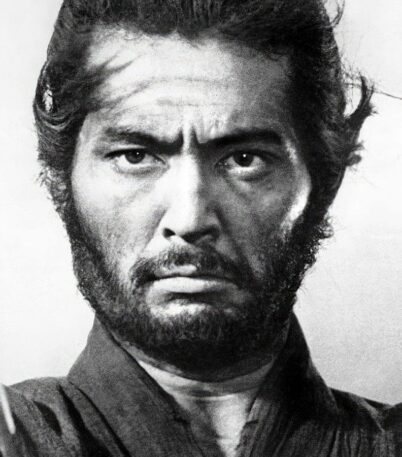
Tatsuya Nakadai, 1932-2025
Who is the greatest actor you’ve (probably) never heard of? I’d nominate the recently deceased Tatsuya Nakadai, who was, along with Toshiro Mifune, Setsuko Hara and Takashi Shimura (all of whom Nakadai outlived), one of the major players in classic Japanese cinema. That of course makes Nakadai a key figure in world cinema, as he appeared in several of the greatest films ever made, and won many prestigious awards (all of which were admittedly handed out post 1990, being “lifetime achievement” honors, although if anyone deserved a lifetime achievement award it was Tatsuya Nakadai).
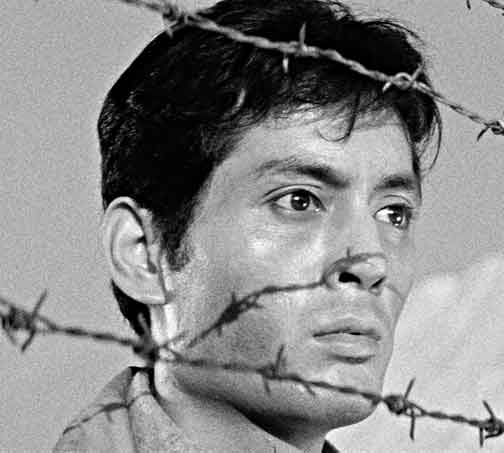
Tatsuya Nakadai, THE HUMAN CONDITION
Few performers of any nationality can boast of working with such an incredible wealth of great directors. Among Nakadai’s 184 acting credits are the HUMAN CONDITION (Ningen no jôken; 1959-61) trilogy, HARAKIRI (1962) and KWAIDAN (1964), all made by the great Masaki Kobayashi, as well as the Hideo Gosha classics GOYOKIN (1969), THE WOLVES (Shussho iwai; 1971) and HUNTER IN THE DARK (Yami no karyudo; 1979), and the Kon Ichikawa films CONFLAGRATON (Enjō; 1958), I AM A CAT (Wagahai wa neko de aru; 1975) and QUEEN BEE (Joôbachi; 1978).
SEVEN SAMURAI (1954) Trailer
Nakadai’s beginnings were inauspicious. His first film credit, in Akira Kurosawa’s immortal SEVEN SAMURAI (Shichinin no samurai; 1954), was as an extra. Specifically, he played “Samurai Wandering Through Town,” in which guise Nakadai allegedly cost the production a day’s worth of filming, as Kurosawa made him repeat the walk multiple times. That doesn’t appear to have soured the great man on Nakadai, as Kurosawa went on to cast him in supporting parts in YOJIMBO (1961), SANJURO (1962) and HIGH AND LOW (Tengoku to jigoku; 1963), and the lead roles in KAGEMUSHA (1980) and RAN (1985).
RAN (1985) Trailer
Outside his work for Kurosawa, I’m especially partial to Nakadai’s performance in Kihachi Okamoto’s SWORD OF DOOM (Dai-bosatsu tôge; 1966). It’s a shockingly little-known film that took the Kurosawa initiated masterless-samurai-roaming-the-wasteland formula in new and intriguing directions. The Nakadai played ronin in this film is a psychopath with zero scruples about killing people, be they good, bad or indifferent, with his “sword of doom.” Okamoto’s black and white photography is stunning, greatly enhancing a meandering narrative that culminates in one of the most savage codas of all time.
SWORD OF DOOM (1966) Trailer
I also admire THE FACE OF ANOTHER (Tanin no kao; 1968). The fourth collaboration between director Hiroshi Teshigahara and novelist/screenwriter Kôbô Abe, it featured Nakadai as a businessman whose face is hideously deformed in an industrial accident. A facial mask is made, and all sorts of surreal complications ensue in a macabre study of identity, appearance and deception. The film is a true horror story for our time that’s impeccably visualized, although it’s Nakadai’s enormously stirring performance that gives THE FACE OF ANOTHER its profoundly haunting charge.
THE FACE OF ANOTHER (1966) Trailer
The fact-based HACHI-KO (Hachikô monogatari; 1987), scripted by Kaneto Shindô and directed by Seijirô Kôyama, is another Nakadai classic. He plays Professor Ueno, a character who halfway through the film dies by cerebral hemorrhage, but whose beloved dog Hachi nonetheless shows up at a Tokyo train station at the same time every day to greet his deceased master. I’m told this 1920s set film follows the facts of Hachi’s story fairly closely, in a narrative that takes its time to arrive at what may be the most profoundly moving final shot in film history. The dog perhaps deserves more credit than Nakadai, but his enormously empathetic performance is integral to HACHI-KO’s cumulative effect.
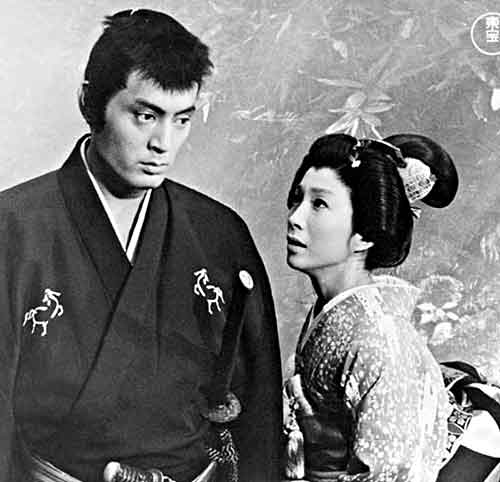
Tatsuya Nakadai, SWORD OF DOOM
Obviously not all of Nakadai’s film credits were terribly auspicious (he also appeared in the 1992 Hong Kong made anime adaptation WICKED CITY/Yiu sau dou si, and 2010’s poorly received ZATOICHI: THE LAST). His primary concern, as with many great actors, appears to have been longevity, and that goal was undoubtedly achieved.
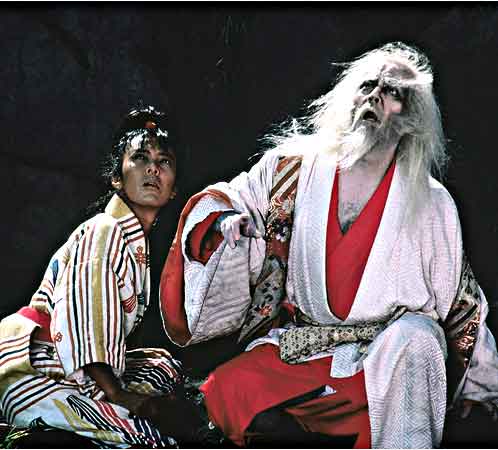
Tatsuya Nakadai, RAN
Nakadai continued working throughout the 2010s, with his final credit, THE PASS: LAST DAYS OF THE SAMURAI, occurring in 2020. He remained active in his final years, maintaining his first love, theater, quite literally to the end of his life, partaking in a May 2025 Japanese stage tour (and regularly flying out from his Tokyo base to see Broadway shows in NYC).
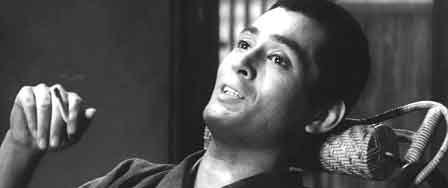
Tatsuya Nakadai, IMMORTAL LOVE
Now Tatsuya Nakadai is gone, and the worlds of film and stage are bereft. We can be glad, at least, that Nakadai worked as diligently as he did during his seven-decade career, as without his presence the many great films he graced would be far less than they are.
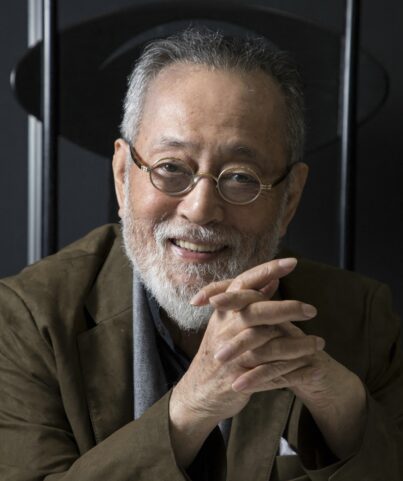
Tatsuya Nakadai