
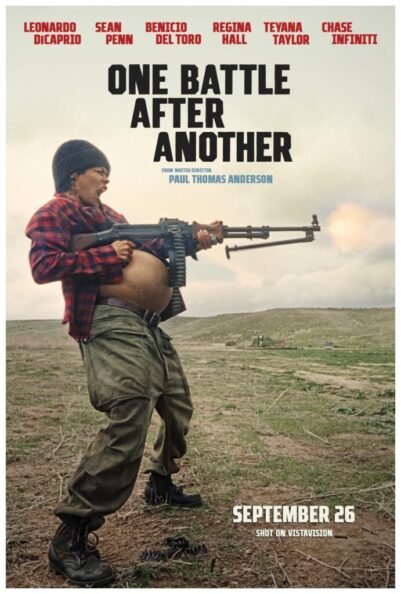
As of October 2025, the major movie-related controversy is over Paul Thomas Anderson’s ONE BATTLE AFTER ANOTHER. The charge of glorifying far left extremism and antifa was made on right-leaning YouTube channels shortly after the film’s September 26 opening, and the furor hit the mainstream with an early October rant by novelist Brett Easton Ellis, who claimed critics have overrated the film because it “Aligns with a leftist sensibility.” Ellis’ takedown was followed by a rebuttal in VARIETY by Owen Gleiberman, who argued that the film’s anti-tyranny stance is not inherently left-wing.
ONE BATTLE AFTER ANOTHER (2025) Trailer
Ellis has a valid point about how “ideology is trumping aesthetics,” but I think he weas incorrect in singling out ONE BATTLE AFTER ANOTHER (contrary to what he claims, no critic I’ve read has called it “the greatest film ever made”). Ellis, incidentally, has also acknowledged that “the right—and conservative—leaning people have kind of misread the film just as much as I think people on the left have overpraised the film,” and on that point I fully concur.

ONE BATTLE AFTER ANOTHER, inspired by the 1990 novel VINELAND by Thomas Pynchon, had a reported $130 million budget (the actual number was allegedly much higher), and fully evidences the visual exuberance, propulsive sound design and epic scope we’ve come to expect from Anderson. It’s not his finest film in my view, but it is his most memorable in some time. The fact that he employed an actual cinematographer, in the form of Michael Bauman (as opposed to Anderson’s two previous films, in which he largely accomplished the cinematography himself), helped immeasurably, and the consistently inventive score by Johnny Greenwood is even more inspired than usual.

I find I’m flashing back to PUNCH-DRUNK LOVE, Anderson’s 2002 Adam Sandler headlined comedy-romance that was released amid a flood of cookie-cutter rom-coms (most of which I was dragged to), with Anderson’s belief in the redemptive power of love a most refreshing development in light of such formula-based narratives. ONE BATTLE AFTER ANOTHER partook of modern filmmaking trends in a similar manner, emerging as an unexpectedly moving product, and proving once again that the Paul Thomas Anderson treatment can work wonders on unpromising material.
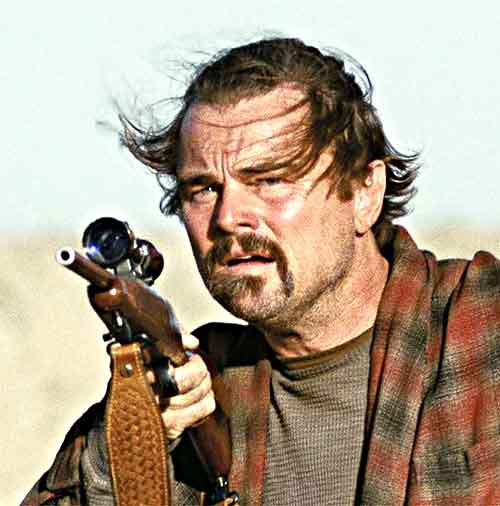
Leonardo DiCaprio
As with many Hollywood releases these days, ONE BATTLE AFTER ANOTHER involves a formerly heroic, broken-down middle-aged man whose legacy is furthered by a plucky young woman. The man is the Leonardo DiCaprio played Bob (or Pat), who formerly ran with an underground movement called French 75 in an alternate universe America. He currently lives with his mixed-race teenage daughter Willa (Chase Infiniti), who seems impossibly well-adjusted despite having after being raised by this loser; the relationship works nonetheless due to the performances of DiCaprio and Infiniti, and the autobiographical resonance (Anderson is himself the father of mixed-race children).
The French 75 movement, whose members speak in early-1970s counterculture cliches, is depicted as a haphazard assortment of fuckups who in the opening half hour get decimated through mass arrests and state-sanctioned violence. In the case of Bob’s especially gung-ho wife Perfida Beverly Hills (Teyana Taylor), she chooses to rat her comrades out to the feds and then decamp to Mexico.
The movement’s surviving remnants do a horrendous job carrying on the fight. A running joke involves Bob, despite his exalted status within the group, being constantly denied entry into its sanctum because he can’t remember a password (showing that French 75 has become every bit as impersonal and bureaucratic as the corporate world it opposes).
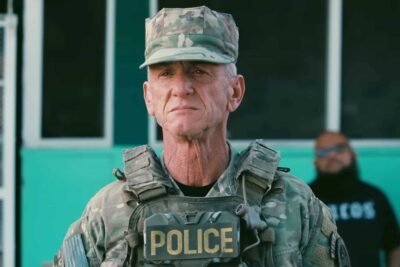
Sean Penn
Another modern cinematic trope utilized by Anderson is the evil white guy antagonist. That character is Col. Steven Lockjaw (Sean Penn), who leads a government run paramilitary organization, and exists in the grand tradition of cartoonish movie military men. He’s a racist, sexist, homophobic loon who walks like he has a literal stick up his ass and harbors a black woman fetish he expends on Perfida, resulting in him siring Willa and pursuing her, and Bob, across the US.
John Hoogenakker
The film is kinetic and exciting, with superbly choreographed car chases and shootouts (although the climax, in which the fates of all the main characters somehow converge on a lonely stretch of highway in Northern California, is a bit of a whopper). The 161-minute runtime passes remarkably quickly but for a couple of severely protracted scenes involving the Christmas Adventurers Club, a white supremacist group played by a retinue that includes Tony Goldwyn (GHOST) and Kevin Tighe (EMERGENCY). Anderson is an adherent of the late Paddy Chayefsky, and appears in these scenes to have followed Chayefsky’s dictum that “audiences like a little tedium, it makes them feel they’re in the presence of something weighty.”
The film’s most prominent failing, and the major catalyst (I believe) for all the controversy, is the lack of any real worldbuilding. This is the closest Paul Thomas Anderson has or will likely ever come to making a science fiction movie, although it can be difficult to discern that. Outside the sight of a bizarrely incongruous 1940s trolly moving through downtown LA there’s scant indication that the film is set in an alternate America and takes place (based on the timeline Anderson lays out) sometime in the mid-1990s. The characters and décor are present-day coded, complete with iPhones, arguments about pronouns and gender nonconforming individuals.

Leonardo DiCaprio
These modern anachronisms were likely intended as symbolic (there’s no better way to critique the present than through science fiction), but that’s not how they play. Those anachronisms have, I’d argue, given rise to the antifa comparisons; the film may not actually be set in the here-and-now, but it’s very easy to believe it does.
Anderson himself has wisely kept quiet about the controversy. Telling audiences how to react, as directors like James Mangold, Leslye Headland and James Gunn have recently done, tends to accomplish nothing but annoyance. I say it’s better to let viewers process films on their own, in the hope that they’ll eventually reach the right conclusion. Just ask Brett Easton Ellis, who after all his slashing and burning of ONE BATTLE AFTER ANOTHER offered this ironic takeaway: “I don’t think the film is totally or necessarily about any specific political ideology…it’s a good story, with interesting characters.”
I couldn’t have said it better myself.