

James Williamson, R. I. P.
This week we bid farewell to one of the most mercurial, enigmatic, and questionable author-publishers in recent history. James Williamson (born Julian Halibut) ran the UK-based underground publishing outfit Creation Books and its many offshoots, and inspired a great deal of controversy and legal action (more on that in a bit). Williamson was also an author, having (self) published fiction as “James Havoc” and nonfiction as “Jack Hunter,” and edited several books as “Candice Black” and “John Bundrick.” Likewise, many imprints were spun off from Creation Books, including Solar Books, Sun Vision Press, Elektron Ebooks, Creation Oneiros, Shinbaku, Velvet, Attack! Books, etc.
Creation Books began in 1989, with the help of Alan McGee of Creation Records. According to Williamson, “Alan was a friend of mine and one day we drank some beer and decided it would be fun to start a book company.” The evident inspiration was Savoy Books, a famously subversive UK based publisher whose main proprietor David Britton was known to write fiction.
The dense, allusion-packed prose of “James Havoc,” contained in publications like SATANSKIN (1995), WHITE SKULL (1996) and TEENAGE TIMBERWOLVES: LUST FOR LIGHTNING (2009), owed a great deal to Britton’s LORD HORROR comics and novels (1989-2022). None of the Havoc books were exceptional in my view (Williamson himself dismissed them in 2014 as “an occasional writing project, for fun”), although TEENAGE TIMBERWOLVES, a graphic novel, was greatly enhanced by the artwork of Daniele Serra. As for Creation’s non-Williamson authored books, they were likewise very much in line with Savoy’s output: challenging and subversive to a fault.
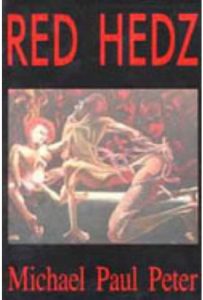
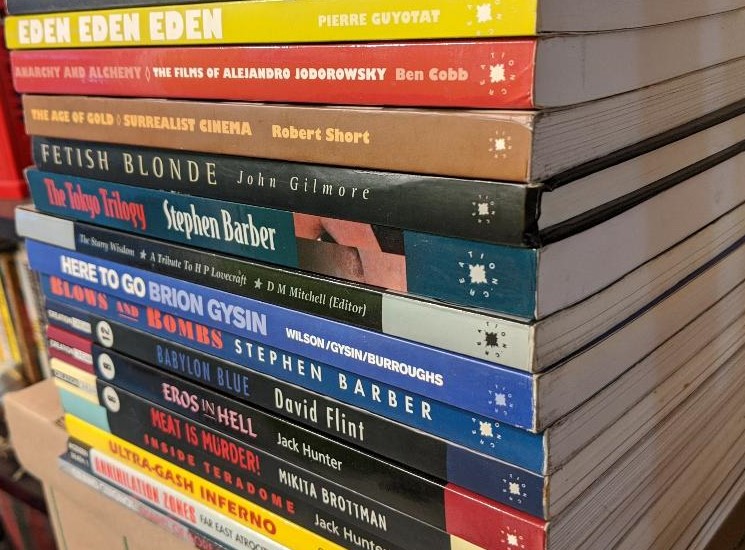
Some great writers of old were published by Creation, including Antonin Artaud, H.P. Lovecraft and William Hope Hodgson (although I’ll confess I’ve been unable to make heads nor tails of more current Creation authors like Pierre Guyotat or Kenji Siratori), as were some undeniably great books. I remain a huge fan of the hallucinatory splatterpunk extravaganza RED HEDZ by “Michael Paul Peter” (a.k.a. Mike Philbin), as well as the D.M. Mitchell edited Lovecraft-inspired anthology THE STARRY WISDOM and Stephen Barker’s J.G. Ballard-meets-George Bataille cyberporn mind-roaster THE TOKYO TRILOGY (in the interests of balance, I’ll reveal that Creation also put out the unreadable cyberpunk pastiche WIRED FOR CHAOS by Brett L. Renwick and the wholly unnecessary MOVIE TOP TEN series of books by “Jack Hunter”).
Those books exemplified Wiliamson’s interests, which included serial killing, cybersex, rock n roll decadence, old school horror and new school pornography. His enthusiasm for such fare was expressed in the enormously engaging back cover descriptions written (most likely) by Williamson himself.
John Gilmore’s FETISH BLONDE (1999) is described as “a novel of labyrinthine plot expressed in terms of subterranean violence and depravity, a trip into a Parisian night world where people’s worst nightmares can—and do—come horribly true.” That description would—and did—get me to part with my money, as did the characterization of Melanie Desmoulins’ THE SNAKE (1997) as a “scarifying testament to uncontrolled sexual mania and the phallic power of the primal serpent” and that of Davide de Angelis’ THE SEED (2004) as a “sensual, fast-streaming ride charged with unforgettable beauty, violence and the mysterious psyche of altered states.” What Creation’s sales figures were I don’t know (the official statement is that “Creation Books and its associated imprints have sold over 1,000,000 copies of their publications to date”), but such enticingly worded come-ons were undoubtedly a step in the right direction, commercially speaking.
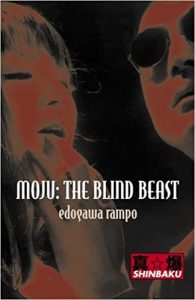
The odds, however, were against Williamson. As of 1999, everything related to Creation—editing, typesetting, publicity, shipping, etc.—was done by Williamson himself. That didn’t staunch the insanely prolific output of Creation Books and its offshoots, which evidently left Williamson with little time to properly accomplish all the tasks related to the running of a publishing company. That was evident in the shockingly sparse content on the Creation Books website and the lack of publicity that accompanied Creation’s books. Included in that line-up were the first (and only) English translations of Stephen Wul’s FANTASTIC PLANET through Creation Oneiros (in 2010) and Edogawa Rampo’s MOJU: THE BLIND BEAST through Shinbaku (in 2015), which should have gotten far more attention on the cult circuit than they did.
A further impediment was the lack of a cogent distribution strategy. Williamson has admitted that his approach to publishing was “punk-style, really. Teach yourself, learn as you go, don’t worry about the established rules.” Having worked in an alternative-minded bookstore in the mid-1990s, and tried very hard to get Creation’s publications sold therein, I can personally attest to Williamson’s lack of business acumen. I claim full credit for turning the 1995 Velvet publication of Pierre Louys’ THE SHE-DEVILS into a minor cult item during my bookstore employee tenure, and can assure you that Williamson himself was absolutely no help in that endeavor.
About other booksellers’ experiences with Creation, I can’t say much. I can recall seeing the 2012 Sun Vision Press publication of a “new, uncensored and more complete version” of Sade’s 120 DAYS OF SODOM offered for sale at my local Barnes and Noble, but that’s the only Creation publication I know of that graced those shelves.
In 2012 a now-defunct website appeared called CREATION BOOKS FRAUD, featuring testimony from quite a few authors Williamson apparently screwed over and readers he’d allegedly ripped off. A year later Williamson, who relocated to Bangkok in 2004 and allegedly spent the remainder of his days there, formally shuttered Creation Books (although at least two Creation imprints, Electron Ebooks and Oneiros Books, were maintained throughout the 2010s and beyond).
Williamson’s reasoning for closing up shop: “Somebody sends you a book which you really like, and you agree to publish it, but in most cases you have no idea who that person is. And half of them turn out to be nutters. Just not nice people.”
Whatever James Williamson’s true reason for his actions might have been (he, for the record, claimed a sudden drop in business in the early 2000s left him unable to pay his bills), I think it’s clear that the single greatest obstacle he faced in his publishing ventures was himself. The most impressive aspect of Williamson’s reign may not have been that he managed to last over thirty years in the publishing field, but, rather, the mere fact that he managed to publish anything at all.