

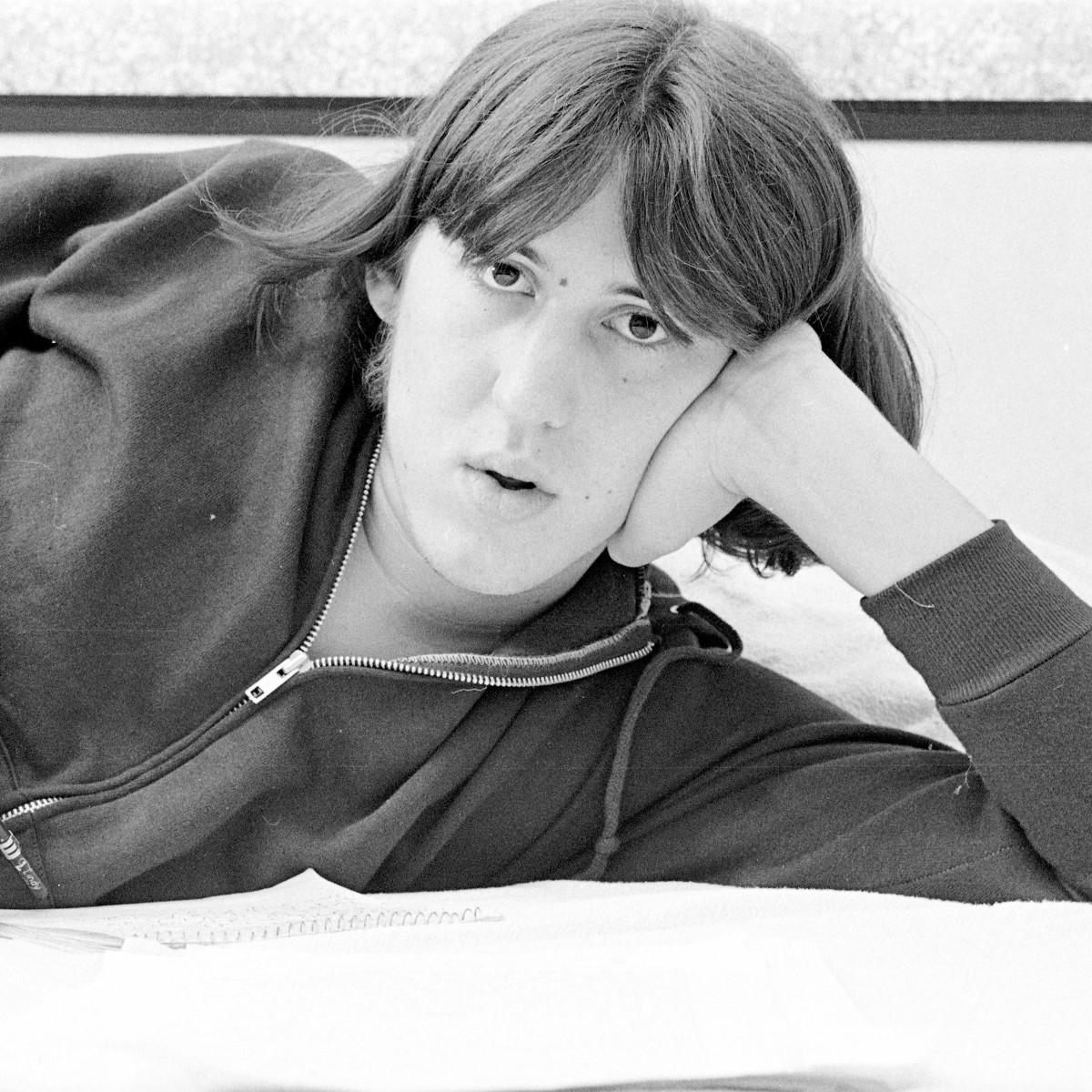
Cameron Crowe
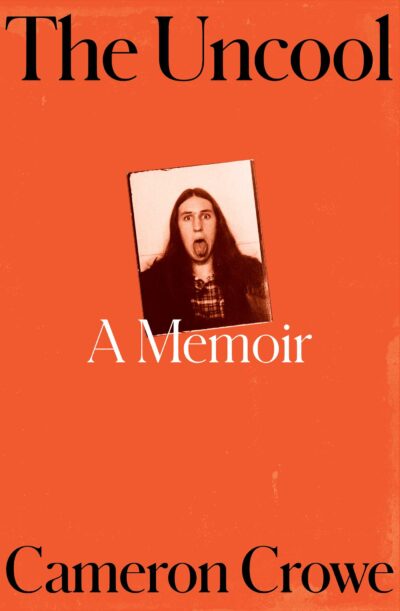
It only took 44 years, but author/filmmaker Cameron Crowe has finally put out a second autobiographical tome. His first, the legendary high school expose FAST TIMES AT RIDGEMONT HIGH, was published in 1981; it’s been out of print since ‘82 (the year of FAST TIMES’ equally legendary film adaptation) and Crowe has made it clear he has no plans to reprint the book, viewing it as a relic of a past era. He’s long been threatening a more comprehensive follow-up, and in October 2025 that follow-up finally appeared, in the form of THE UNCOOL.
Crowe spent his teen years as a contributor to ROLLING STONE magazine, reviewing albums and interviewing bands. Those years were dramatized in the Academy Award winning film ALMOST FAMOUS (2000), which remains the highlight of the second phase of Crowe’s career, when he ditched journalism in favor of writing and directing. Aside from the FAST TIMES AT RIDGEMONT HIGH screenplay, his filmography includes SAY ANYTHING… (1989), JERRY MAGUIRE (1996) and VANILLA SKY (2001).
As of this writing, Crowe’s last film, the mega-flop ALOHA, appeared in 2015, meaning his Hollywood career may well be going the way of his repertorial tenure. Thus, a renewed turn to the literary was a good idea, and THE UNCOOL a damn good book. Before examining it, though, let’s take a look back at Crowe’s inaugural publication.
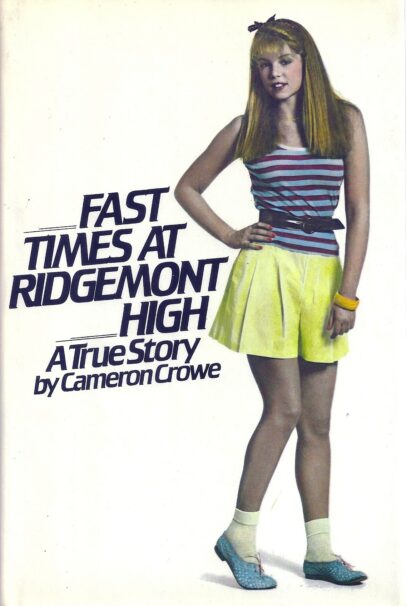
FAST TIMES AT RIDGEMONT HIGH is a lively account of the 22-year-old Cameron Crowe’s year at “Ridgemont High” (actually the San Diego based Clairemont High School), where he posed as a student. Crowe was apparently feeling regretful about missing out on high school life due to all the time he spent hanging out with rock bands (and the fact that what little formal education he had occurred at a not-very-happening Catholic school), and anxious to see what the kids were up to.
What’s described here isn’t too divergent from my own So Cal based high school experiences, which occurred roughly a decade later (back in the eighties it was erroneously believed that Ridgemont High was actually Redondo Union High School, located not far from where I grew up). The major difference: I don’t recall my schoolmates being quite as sexed-up as the teens in this book, whose erotic content likely come about due to the demands of the early 1980s publishing industry, in which sex was omnipresent (and also PLAYBOY magazine, which published spicy excerpts from FAST TIMES).
The book works best nowadays as a fleshing-out of the characters immortalized by the movie (meaning if you’re not a fan of the film there’s probably no point in reading the book). They include the cool girl Linda Barrett and her sexually inexperienced friend Stacy Hamilton, as well as the latter’s Carl’s Jr. employed brother Brad, Mark “The Rat” Ratner (a “pale kid with dark hair that tilted to one side like the Leaning Tower of Pisa”), the perpetually stoned surfer Jeff Spicoli and Mr. Hand, an elderly teacher battling “what he saw as the greatest threat to the youth of this land—truancy.”
The book is often crudely written, fully showcasing its young author’s inexperience; the episodic grouping of short chapters that end with greeting card-styled zingers gets old pretty quickly. Crowe deserves credit, though, for bucking the particulars of traditional high school exposés, which exist more often than not to rat out bad behavior or make sure the young generation is conforming to the author’s political convictions. Here Crowe was simply reporting on what he saw, without editorializing or self-insertion—because “This story, I felt, belonged to the kids themselves.”
The conception and writing of FAST TIMES are recorded in THE UNCOOL, but not many pages are devoted to it. Nor is Crowe’s filmmaking career given much ink, with the ALMOST FAMOUS film dispensed with in a few paragraphs. Far more attention is lavished on the ALMOST FAMOUS musical, most likely because the inception occurred while its creator’s mother Alice Marie Crowe was dying.
As she did in both incarnations of ALMOST FAMOUS, Alice Marie assumes an outsized presence in THE UNCOOL. She served as an anchor for her teenaged son during his rock ‘n’ roll sojourn, having inculcated in him a healthy sense of self-possession. Crowe claims he turned down repeated offers to indulge in illegal substances, with his sole instance of druggy indulgence (as recorded here) being the smoking of marijuana filched from Bob Marley’s stash (“I cannot begin to tell you the strength of the headaches it produced”). Rather inexplicably, Alice Marie’s reality-based phone conversation with a rock star, which constituted one of the ALMOST FAMOUS film’s most memorable scenes, is nowhere to be found in these pages.
What can be found are thoughtful portraits of Jim Morrison’s late biographer Danny Sugarman, an irrepressible hustler who’s likened to Eddie Haskell; Kris Kristofferson, with whom Crowe spent several starstruck days (and who gets a prominent mention in the nonfiction forward to FAST TIMES); David Bowie, whose months-long transformation into his “Thin White Dude” persona was meticulously documented by Crowe; the Allman Brothers, with whom Crowe toured (and got accused of being a narc by Gregg Allman); Jimmy Page, who really hated ROLLING STONE but agreed to let Crowe interview him for the mag; and Glenn Frey, the source for the “attitude” speech given by Mike Dimone (Robert Romanus) in the FAST TIMES AT RIDGEMONT HIGH movie.
Crowe’s famously amiable nature shines through in his unfailingly generous and enthusiastic descriptions, and his very forgiving recollections of the oft-dismissive behavior of his idols (i.e. Pete Townsend blowing off a compliment about a just-completed performance with “It was rubbish,” and a tense encounter with Lou Reed, who was “Whatever you’d call the opposite of impressed”). Indeed, having an admiring letter to J.D. Salinger returned with a “Package Refused” notification was apparently “almost as good as a yes.”
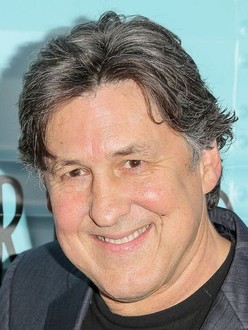 Cameron Crowe’s third major publication, incidentally, was 1999’s CONVERSATIONS WITH WILDER. It consisted of Crowe interviewing the late filmmaker Billy Wilder (1906-2002) about his filmography, which included classics like DOUBLE INDEMNITY (1944), SUNSET BOULEVARD (1950) and THE APARTMENT (1960). The pairing of the optimistic Crowe with the cynical Wilder was an unexpected but ultimately appropriate one, not unlike Alfred Hitchock and Francois Truffaut (in HITCHCOCK/TRUFFAUT) or Steven Soderbergh and Richard Lester (in GETTING AWAY WITH IT). It’s a good book, in short, but for a true Crowe accounting the ones to read are FAST TIMES AT RIDGEMONT HIGH and THE UNCOOL.