
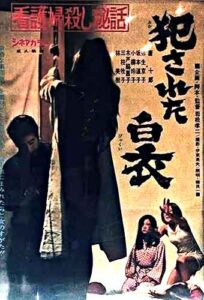
One of the most notorious films made by the renowned Japanese experimentalist Koji Wakamatsu (1936-2012), VIOLATED ANGELS (Okasareta hakui; 1967) was a ground-breakingly gruesome example of avant-garde pinku (adults only) cinema. Inspired by the 1966 murder spree committed by the American serial killer Richard Speck, it followed Wakamatsu’s nearly-as-extreme EMBRYO HUNTS IN SECRET (Taiji ga mitsuryô suru toki; 1966) and preceded DARK STORY OF A JAPANESE RAPIST (Zoku Nihon bôkô ankokushi: Bôgyakuma; 1967), showcasing a frankly unhealthy fascination with sex and violence that provided a dark preview of what was to come in Japanese cinema.
VIOLATED ANGELS (1967) Clip
The film opens with a 3 minute still frame montage depicting “Handsome Boy” (Juro Kara) going about his daily business, juxtaposed with shocking-by-1960s-standards female nudity (and so offering a foretaste of the film’s unprecedented mixture of eroticism and bloodletting). Cut to a secluded house on the outskirts of Tokyo wherein several attractive young nurses are residing; presently, one of the nurses is getting it on with a male visitor, which greatly excites the ladies. The gals unwisely spot Handsome Boy wandering around outside and let him in. Upon seeing the copulating couple, he takes out a handgun and shoots both participants.
From there Handsome Boy methodically kills each of the nurses via gun and, in one case, a straight razor, assailed all the while by fantasies of the ladies stripped naked and laughing at him. At one point the head nurse (Keiko Koyanagi) tries to reason with him, arguing that she and her fellow nurses are “angels in white dresses,” and that “You’re upset because you don’t have sex, and you’ve found it easier to kill for attention.” This, needless to add, does nothing to staunch the killing.
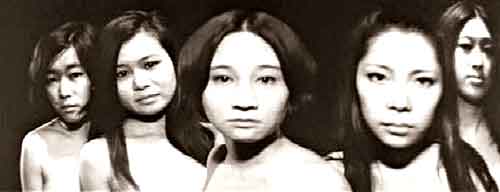
That the film was based on actual events explains, but doesn’t excuse, the shallow and repetitive nature of the proceedings. In common with fellow Japanese provocateurs like Toshio Matsumoto and Nagisa Oshima, Wakamatsu prizes shock as much as, if not more so than, the cinematic innovation with which he made his name. That latter aspect is manifested in repetitive camera movements contained within extended takes, combined with Godardian montage editing.
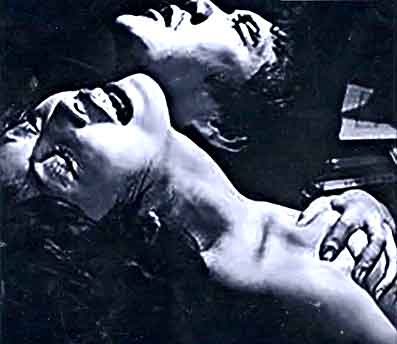
Given the age of the film (nearly 60 years), the bloodletting has lost much of the potency it once possessed, and the psychological angle, which Wakamatsu evidently took quite seriously, seems pretty silly (with the psychotic protagonist a stone-faced nut with a tendency to press his hands to his head in apparent agony). Wakamatsu and cinematographer Hideo Itô did, however, succeed in crafting some powerfully disturbing widescreen images (select stills from VIOLATED ANGELS grace the covers of publications by the late Creation Books), filmed in ultra-stark, noirish black and white (with occasional snatches of color), resulting in a film that at the very least looks quite good.
Vital Statistics
VIOLATED ANGELS
Wakamatsu Production
Director/Producer/Screenplay: Koji Wakamatsu
Cinematography: Hideo Itô
Editing: Fumio Tomita
Cast: Juro Kara, Keiko Koyanagi, Miki Hayashi, Shoko Kidowaki, Makiko Saegusa, Kyoko Yoyoi, Michiko Sakamoto