
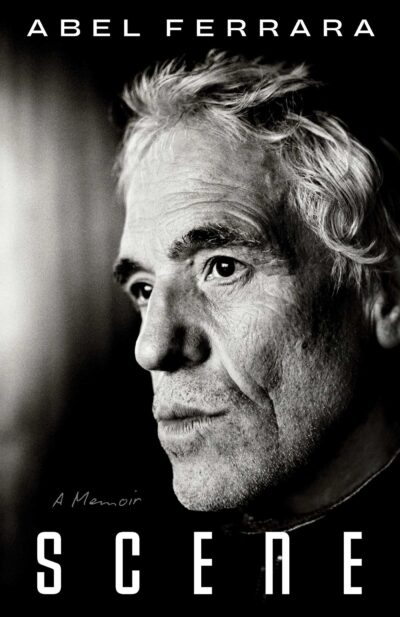
By ABEL FERRARA (Simon & Schuster; 2025)
Abel Ferrara is one of America’s least compromising and most outspoken filmmakers. He is, after Martin Scorsese, the ultimate New York director, turning out deeply felt, poetic thrillers with gritty urban backdrops.
Blunt, heartfelt and profane are words that adequately describe this long-in-coming memoir, as are outrageous, unflinching and idiosyncratic. Contained is everything you’d expect from the director of MS. 45 (1981) and THE KING OF NEW YORK (1990), and the originator of quotes like “It’s bad enough paying a guy $200 to fuck your girlfriend, then he can’t get it up.” Whatever else SCENE may be, it’s pure Abel Ferrara.
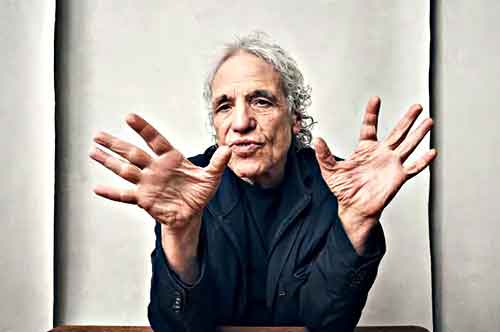
Abel Ferrera
It also serves as an excellent primer on the horrors of heroin addiction, the “rightful conclusion” of which, according to Ferrara, “is either jail, death, or total abstinence.” As recounted in these pages, heroin was a defining tenet of Ferrara’s existence, leading to numerous arrests and at least one eviction (“If you have never been evicted from your apartment I would suggest you pay your rent or leave voluntarily”). Further casualties of Ferrara’s addiction include his marriage to sometime cast member Nancy Ferrara and his bond with longtime writing partner Nicholas St. John, who in the late nineties quit the screen trade and decamped to Peekskill, NY (after which “I never saw him again”).
As with any worthwhile moviemaking memoir, there’s plenty of name-dropping to be found in SCENE. Asia Argento is described stringing along Ferrara, Willem Dafoe and Vincent Gallo during the production of NEW ROSE HOTEL (1998), while frequent Ferrara performer Christopher Walken is remembered for the “super weed” he “always carried around,” and the late Zoë Lund for shooting up onscreen in BAD LIEUTENANT (1992), on “her birthday of all things.”
Lund, it turned out, was one of several Ferrara performers whose lives were destroyed by “H,” expiring in 1999 at age 37. Others included Chris Penn, who OD’d in 2006, and Lillo Brancato, who was incarcerated due to his participation in a drug-related murder (the story of which is recounted in these pages).
We also learn that Ferrara was supposed to direct CARLITO’S WAY (1993) but got booted after filching a bottle of wine from Universal head Tom Pollock, that KING OF NEW YORK was inspired primarily by THE TERMINATOR (1984), that CHINA GIRL (1987) came about via a spur-of-the-moment pitch line Ferrara blurted out to Dino de Laurentiis (and flopped because “No one was interested in Chinese gangs, not even the Chinese”) and that BAD LIEUTENANT was “a documentary, a how-to on destroying your life with alcohol and cocaine.”
The overriding arc is an optimistic one: Ferrara in the final pages claims to have gotten clean, married a good woman (who happens to be more than 40 years younger) and birthed a daughter. Whether this idyllic existence lasts is an open question, but Abel Ferrara’s filmic legacy will unquestionably live on, as, I predict, will this book.