
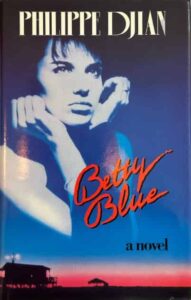
By PHILIPPE DJIAN (Weidenfeld & Nicholson; 1985/88)
A sprightly (if unfocused) account of a tragic love affair that was made into an enormously popular Jean-Jacques Beineix directed, Beatrice Dalle headlined 1986 film. The first book by France’s gifted Philippe Djian (ELLE) to be translated into English, BETTY BLUE (a.k.a. 37° LE MATIN) deserves to be read on its own terms, being a singularly wild, sexual and outrageous jaunt that in my view outdoes the film.
BETTY BLUE (1986) Trailer
The first person protagonist is a 35-year-old handyman in love with Betty, a high-spirited, vivacious beauty who’s also a schizophrenic nymphomaniac. The two waste no time cohabitating (and having lots of sex) in a laid-back beach community, which at first seems like a great deal—a “sort of technicolor dream,” in fact, given that the narrator, a wannabe writer, is such a happy-go-lucky fellow. Even better, Betty discovers his unpublished scribblings, types them up and sends them off to publishers. Never mind that this deeply odd couple has to constantly relocate, moving from town to town like fugitives after Betty invariably ruins things with her insane fits, which only seem to grow increasingly dangerous and aggressive—especially when the narrator’s manuscript gets rejected by publishers, something Betty takes as a personal affront.

What makes the story so intriguing and unusual isn’t Betty (although she is a singularly compelling and tragic figure), but rather the narrator and his increasingly desperate attempts at rationalizing and/or ignoring her nutty behavior. He really doesn’t want the party to stop, and will do anything to maintain the idyllic lifestyle he’s attained—and that anything comes to include robbery, kidnapping and murder, until by the end he’s every bit as nutty as she, conversing with a cat that in his mind speaks in Betty’s voice.
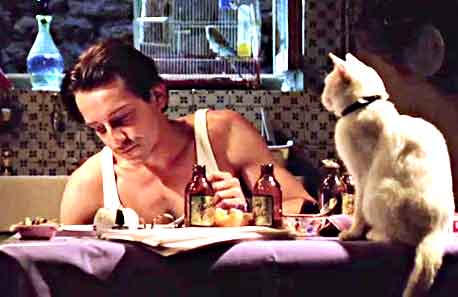
The prose (extremely well translated by Howard Buten) is spunky and laid back, describing Betty’s initial outrages in an unnervingly calm, matter-of-fact manner. That prose, in other words, perfectly matches the protagonist’s attitude, with it, like he, growing steadily deeper and more resonant as the narrative darkens. Good stuff, although, at 341 plotless pages, a bit rambling and overlong for my tastes (in that respect, however, this book still outdoes the film, which in its director’s cut version runs a numbing three hours).